
2025 - 2026
Habitat Rio
The Habitat Rio is a bio-based net zero structure made from sustainable Brazilian conservation timber. This floating moveable hub for systemic collaboration is designed to draw together shared interests and resources, and promote the development of the regional bio-based economy: construction, entrepreneurship, research and collaboration. Following the COP30 in Belém, the structure will serve as a mobile hub for the socio-bio-economy in the territory of the Amazonas-Tapajós Model Forest (FLOMAT), managed by the Federal University of Western Pará (UFOPA). Habitat Bio is based on the principles of sustainable and regenerative development that promotes forest management and conservation, social justice and economic growth.

The proposed use involves utilising Habitat Bio as a mobile socio-bio-economy hub and community extension centre dedicated to research, development, and education, with special focus on serving and strengthening the more than 100 Indigenous and traditional communities that are part of 4 million hectare territory of the FLOMAT. This initiative aims to foster long-term knowledge exchange, sustainable environmental management, community-based forest management, and socioeconomic development in key territories of the Amazon region.
Designed to accomodate up to 200 people for events, classes, meetings, receptions and research, the structure will demonstrate the potentials of sustainable timber construction for cities and local communities globally. Led by Pilot Projects Collaborative in partnership with UFOPA, Model Forest Amazonas-Tapajós, Ministry of Indigenous Peoples, Amazonian architects, engineers, foresters, communities, and other national and international organizations.

The Habitat Bio will highlight both mass timber and conservation timber, demonstrating the integration between sustainable construction, urban development, and climate resilience. The structure will feature Brazilian wood from sustainable sources such as local community forests, certified plantation wood, whole-tree columns to minimize waste and reclaimed "circular" wood elements.
The three floors of the Habitat Bio were designed as a platform for collaboration, education, and discussions on sustainable development and biomaterials. Through its diverse range of activities, it will promote dialogue, knowledge exchange and actionable commitments to environmental sustainability and urban resilience.
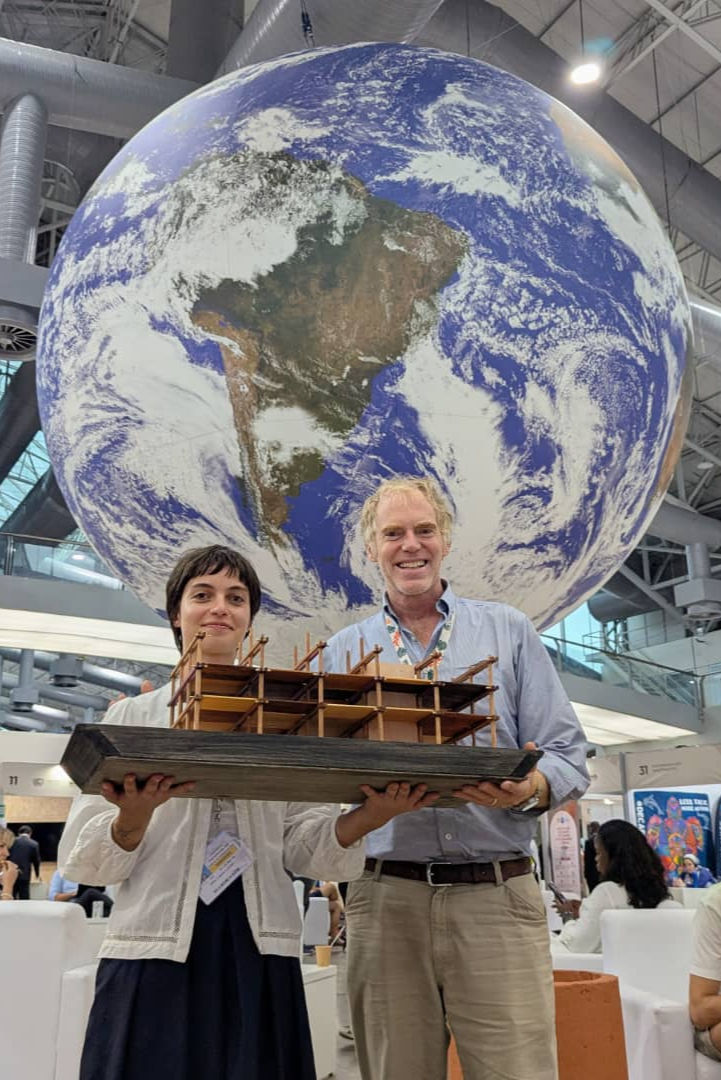
COP30 in Belém, Brazil
Presented at COP30 with multi stakeholders, the Habitat Bio is responding to the global discussions on innovative solutions and climate resilience.
During COP30, we presented the initiative and met with some of the key stakeholders for discussion and familiarisation with the project. We delivered presentations about the structure at the Aldeia COP and in the Blue Zone, engaging with diverse audiences and partners to build awareness and support for the initiative. These interactions were instrumental in establishing collaborative relationships, strengthening local support and demonstrating the potential of the Habitat Bio as a model for sustainable construction and community-centred development in the Amazon region.
Collaborative Opportunity
We are currently looking for funding partners.
If you would like to partner in this project, please contact us.


